Showing posts with label nba. Show all posts

Wednesday, August 20, 2014

Phoenix Suns Trade Charles Barkley To Houston Rockets


On Aug. 19, 1996, the Phoenix Suns trade superstar forward Charles Barkley -- along with a second round draft pick -- to the Houston Rockets for Robert Horry, Sam Cassell, Chucky Brown, and Mark Bryant. Barkley, at the time a 10-time All-Star, had demanded a trade since he learned that the Suns were interested in dealing him. "The bottom line was, I initially wanted to finish my career in Phoenix," Barkley said, "but I told them if they were going to shop me, I would never play there again.
With the move, the Rockets added one of the greatast players of all time to a roster that already featured Hakeem Olajuwon and Clyde Drexler. Had the deal been made just a year or two sooner, the Rockets might have had one of the greatest trios in NBA history. 

Instead, Olajuwon, Drexler and Barkley were all in their thirties and were not the players they once were. The trade gave them an initial boost, as the Rockets won 57 games and advanced to the conference finals in 1997. But after that, the team progressively got worse and worse until they missed the postseason in 2000.

As for the Suns, the deal did nothing for them either. 

Although they remained competitive and made the postseason in 10 of the next 12 seasons, the main players they received in the trade -- Sam Cassell and Robert Horry -- were nothing more than trade bait. 

In December, Cassell was traded to the Dallas Mavericks for Jason Kidd and was later sent to the New Jersey Nets. 

Horry, meanwhile, had a memorable incident with Suns coach Danny Ainge where he threw a towel at him during a game; he was traded to the Los Angeles Lakers not long after that.


Monday, August 4, 2014

Houston Rockets Trade Hakeem Olajuwon To Toronto Raptors


On August 2, 2001, following in the footsteps of New York Knicks, who had recently traded Patrick Ewing to Seattle, the Houston Rockets trade an aging Hakeem Olajuwon, their best player in franchise history, to the Toronto Raptors for a pair of draft picks. Olajuwon was one of the 50 greatest players in history and had spent the previous 17 years in Houston. But upon making it clear that the Raptors were offering him more money, the Rockets moved him in a sign-and-trade.

Many wondered if the alliance of Olajuwon and Vince Carter would make the Raptors, who came within a jump shot of beating the Eastern Conference champion 76ers, a legitimate contender. But those who felt this way overestimated Olajuwon, who had been trailing off in his later years in Houston. With the Raptors, on a new team, in a different country, Hakeem's performance faltered. In 61 games, Olajuwon shot only 46.4% from the floor while averaging just 7.1 points and 6.0 rebounds per game -- all career lows.

The Raptors lost to the Detroit Pistons in the first round that year. Before the start of the next season, the 39 year-old Olajuwon called it quits after suffering a back injury, ending one of the best careers in NBA history. Olajuwon was so irrelevant in Toronto that many people may be surprised to learn he even played there.

Olajuwon ended his career as one the most prolific scoring centers to have played the game and was inducted into the NBA Hall of Fame in 2008. Olajuwon finished his career as a two-time NBA Champion in 1994 and 1995, and was the NBA MVP in 1994, and the NBA Finals MVP in 1994 and 1995. Olajuwon was also selected to the NBA’s 50th Anniversary All-Time Team in 1996.

Thursday, July 31, 2014

Kevin Garnett Traded To Boston Celtics


On July 31, 2007, after weeks and weeks and weeks of speculation, after rumored trades with the Lakers, Suns, and Warriors fell to the wayside, the Minnesota Timberwolves trade Kevin Garnett to the Boston Celtics for Al Jefferson, Sebastian Telfair, Theo Ratliff, Ryan Gomes, Gerald Green, and two first round draft picks. The Boston Celtics traded ten current and future players, essentially everyone but Paul Pierce, in order to acquire Ray Allen and Kevin Garnett. It payed off though, as the threesome of Pierce, Allen, and Garnett was easily the best trio in the NBA.

The anticipation for the Celtics season was instant. In the span of one week, the Celtics' odds of winning the title went from 100-1 to 5-1. By opening day, Boston had sold out 94% of their home tickets for the season. And with the additions of James Posey, Eddie House, and P.J. Brown, the Celtics did not disappoint. They began the season 8-0 and never looked back, finishing with a league-best 66 wins.

Boston struggled to maintain their excellence in the postseason. Both their first and second round series with the Hawks and Cavaliers went seven games, and they even trailed in the third round to the Detroit Pistons. Ray Allen was atrocious the first two and half rounds of the playoffs, but he got it going late in the Conference Finals. He then played great in the NBA Finals, helping the Celtics beat the L.A. Lakers and win their first title in over two decades.

The Celtics' acquisition of a future Hall of Famer in Kevin Garnett was the best thing to happen to the NBA in a while. They were coming off a terrible season that included a horribly-rated Spurs-Cavaliers Finals and the revelation that one of their officials was fixing games. Getting the attention off of the negative, and back onto the glory of a Celtics-Lakers Finals, was just what the doctor ordered.

Wednesday, July 16, 2014

NBA's Warriors Add Golden State; Drop San Francisco


On July 16, 1971, the National Basketball Association San Francisco Warriors, add Golden State, and take away San Francisco from their name.
The San Diego Evening Tribune reports that the San Francisco Warriors will play half of their home games on the 1972 schedule in Oakland, with the other half to be played in San Diego. With the team moving out of San Francisco, it was also reported that the team would be changing its name to the "Golden State Warriors," so as to identify with both the cities of Oakland and San Diego.

As it turned out, the Warriors only played six games in San Diego that year, and then switched to playing in Oakland full-time. But they kept the "Golden State" name anyway, making them the only team in the NBA to not include their city or state in their name (although California's state motto was "the Golden State.")

The team would also change their logo, which was supposed to compensate for the confusion some fans had when they asked, "Where do the Golden State Warriors play?" The Warriors' new logo featured the outline of California, and had a blue star positioned on the edge of the state where the Bay Area was located.

As unique as it was, the Warriors weren't the only Oakland sports team to go this route.

One year earlier, the Oakland Seals of the NHL changed their name to the "California Golden Seals." Besides dropping the "Oakland" from their title, the Seals had also moved out of San Francisco.

In 1976, the Seals moved east and became the Cleveland Barons, where they lasted for two seasons before folding.

However, the Golden State might drop from the teams name as the team has proposed to build a 17,000-to-19,000-seat waterfront arena on Piers 30 and 32 in San Francisco on a 13-acre site near the Bay Bridge they hope to finish in time for the 2017-18 NBA season, when the team's lease at the Oracle Arena in Oakland expires

Since being named the Golden State Warriors, the Bay Area’s sole basketball franchise has won one NBA Championship coming in the 1974-1975 season, where the team beat the Washington Bullets in a four-game sweep, with home games being played in Oakland and San Francisco.

Since that 1974-1975 season the Warriors have struggled to get back to the NBA Finals obtaining only one Division Title coming in 1976.

Last years playoff appearance for the Warriors was only their third in the last 20 years, and second in the last two years. However, this year they were unable to reach the second round again falling to the higher seeded Los Angeles Clippers

This off-season the Golden State Warriors have made and have tried to make several more moves to bolster their lineup for the upcoming season including trying to trade for Kevin Love who the Warriors General Manager Bob Myers said is the right piece to put the Warriors over the hump and playing for the Western Conference Championship, similar to what he said last year when the club signed Andre Iguodala.

Thursday, July 3, 2014

NBA Approves Move Of Vancouver Grizzlies To Memphis

On July 3, 2001, NBA owners approve the Vancouver Grizzlies to move to Memphis, Tennessee -- just six years after the Grizzlies joined the NBA as an expansion team.

Attendance for Grizzlies games had been tepid from the start, and with a roster as bad as it gets, the Grizz saw what little fans they had spurn the team completely.

The NBA's experiment in Vancouver, which many considered the best city in all of North America, was an immense failure that many people still look back on. With the move, the Toronto Raptors became the sole NBA team in Canada.

There were several reasons, besides the financial aspect, why the team was forced to migrate to Memphis. For some, the blame rested on the decision to give Bryant "Big Country" Reeves a $65 million contract.

Not only was Reeves not a star, he was perpetually injured and wound up collecting the final years of his contract from the comfort of his sofa.

However, many people blamed the fate of the Grizzlies on Steve Francis, who the Grizzlies had drafted in 1999 with the No. 2 pick. Francis refused to play in Canada and was forced to be dealt to the Houston Rockets two months later. Francis went on to become a star in Houston and deprived the Grizzlies from having a player the could market and build around.


In Memphis, the Grizzlies spent several seasons playing at the Memphis Pyramid before a new stadium was constructed.

Even though they were now in the smallest market in the league, the team experienced a modest improvement in attendance -- mainly because they were now in a city where basketball was a big deal.

Vancouver showed the NBA that you can't just put a team anywhere; the city has to clamor for one in order for it to work.

Saturday, June 28, 2014

The 1995 NBA Draft


On June 28, 1995, the NBA Draft took place at the Skydome in Toronto, Ontario. This marked the first occasion that the draft was held outside the United States.

The 1995 NBA Draft was also the first for the newly added expansion teams, both Canadian squads in the Vancouver Grizzlies and Toronto Raptors, who held the sixth and seventh picks, respectively.  


With the sixth pick the Grizzlies selected center Bryant “Big Country” Reeves out of Oklahoma State, while the Raptors chose point guard Damon Stoudamire from the Arizona Wildcats.  Reeves turned out to be a bust playing in only six seasons in the NBA and averaging a mediocre 12.5 points per game throughout his career.

Damon Stoudamire went on to enjoy a fine NBA career.  In his first year he was awarded the Eddie Gottlieb Trophy as the league’s Rookie of the Year.  Stoudamire would play 13 seasons, many as a starter and appeared in the playoffs seven times.

Thursday, June 26, 2014

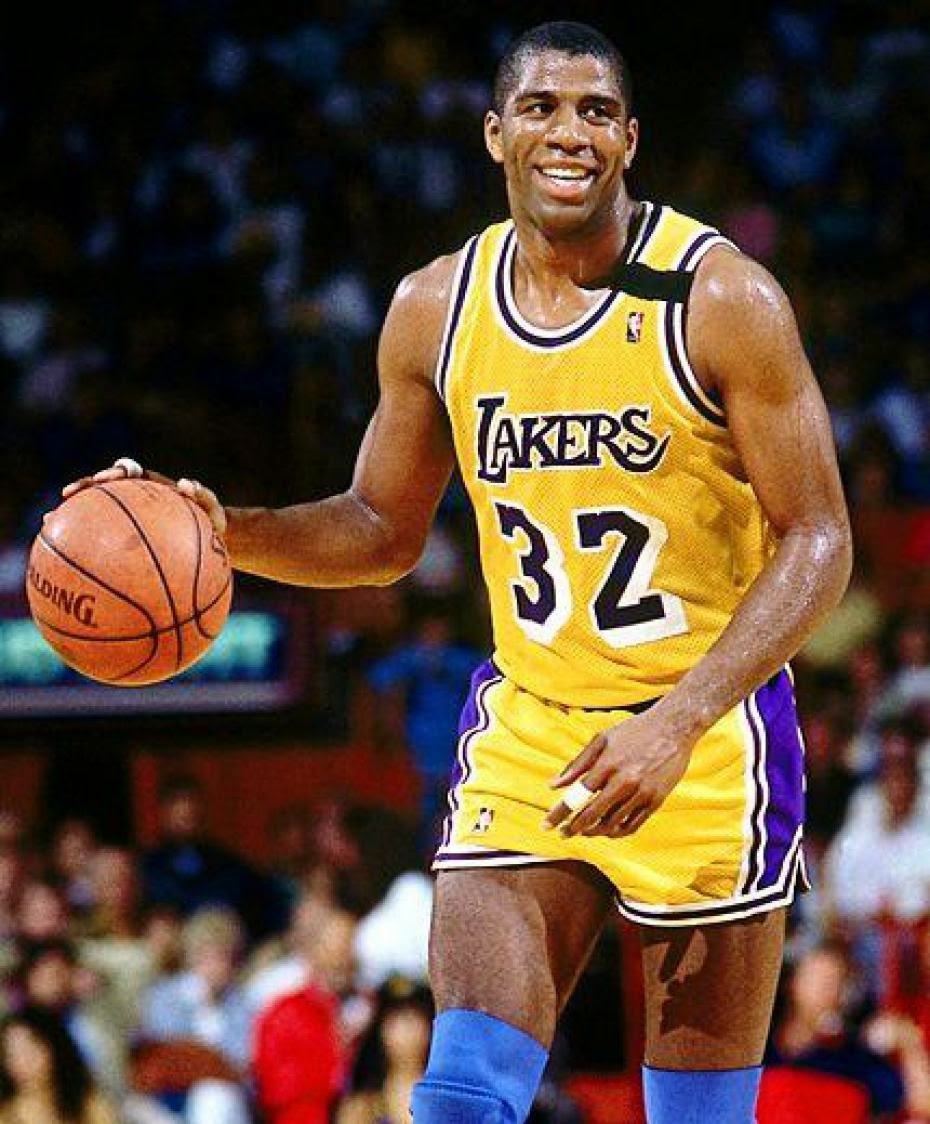
Los Angeles Lakers Sign Magic Johnson To 25 Year Deal

There are short contracts. There are long contracts. And then there's the contract Magic Johnson received on June 26, 1981.

After just two seasons, Magic Johnson was already considered one of the most talented players the NBA ever had. It was that level of skill that granted Magic the the most extensive deal in NBA history, as Jerry Buss handed Magic a 25-year, $25 million contract to stick around with the Los Angeles Lakers.

The deal began in 1984, would have ended in 2009, and gave the Lakers' guard one million per season. 

Johnson became just the third player to earn a million-dollar annual salary, joining fellow L.A. teammate Kareem Abdul-Jabbar and Houston Rockets forward Moses Malone.

Though he had been given largest contract in the history of professional sports, Johnson was a long way from being happy. Only five months later, the franchise player asked to be traded and subsequently forced Buss to fire head coach Paul Westhead.


With the hiring of Pat Riley in Westhead's place, Johnson remained with the Los Angeles Lakers and helped them win multiple titles over the course of the decade. But by the time his contract became active, it was no longer the lucrative mega-deal that it was when he signed it. Players of all sports were now making $2-3 million a year, and his 25-year deal was preventing him from raking in the cash. He later renegotiated his deal and resumed make top dollar like everyone else.

Tuesday, June 24, 2014

Dallas Mavericks Trade For Dirk Nowitzki And Steve Nash


On June 24, 1998, the Dallas Mavericks pull off one of the greatest draft day trades of all time, acquiring not one but two franchise players in one fell swoop. 

In what was essentially a three-team trade involving the Milwaukee Bucks and Phoenix Suns, the Dallas Mavericks received Dirk Nowitzki (the ninth pick in the draft) from the Milwaukee Bucks for Robert "Tractor" Traylor (the sixth pick in the draft) and Pat Garrity; the Mavs then traded Garrity, two throw-in players, and a future first round draft pick to the Suns for Steve Nash.

The move, orchestrated by Dallas head coach Don Nelson, was a brilliant one. Steve Nash went from being an above-average backup to becoming the best point guard in the NBA. Nowitzki became the most versatile seven-footer the league had ever seen and was the first European-born player to win the MVP. 

With the help of those two, the Mavericks went from one of the most inept franchises in the league to a perennial powerhouse in the Western Conference.
 
Steve Nash would later return to Phoenix as a free agent, where he won two MVP awards and turned the franchise around. 

The Bucks, on the other hand, did not get a consolation prize. Tractor Traylor played only seven seasons in the NBA and had a career average of 4.8 points per game -- miles away from Dirk Nowitzki, who averaged 26.6 per game in 2006.

Bucks fans would rue the trade for years to come. Had they not traded away Nowitzki and instead teamed him with their big three of Ray Allen, Sam Cassell, and Glenn Robinson -- a team that would go to the Eastern Conference Finals in 2001 -- the Bucks would have been a championship-caliber team. Instead they watched in agony as the Mavericks advanced to the NBA Finals in 2006, while their team struggled just to stay relevant.

Nowitzki has since won an NBA title with the Dallas Mavericks in 2011, beating the Miami Heat in six games to win himself, Mark Cuban the Mavericks general manager and the fans of Dallas basketball franchise their first NBA Championship. Nowitzki also won the NBA MVP in 2007, along with being named an NBA All-Star 11 times.

Nash has since went on to win two NBA MVP’s in 2005 and 2006, as a member of the Phoenix Suns, where he was traded in 2004, as well as being named to eight NBA All-Star games.

Tuesday, May 20, 2014

Portland Trailblazers Initiate "Hack-a-Shaq"


On May 20, 2000, the Portland Trailblazers played against the Los Angeles Lakers in a playoff game, but the big news was what happened to Shaquille O’Neal on that day.
Shaquille O'Neal (right) and Kobe Bryant (left) hug it out during Game 1 of the series with the Portland Trailblazers in 2002.
For years, NBA teams had taken advantage of poor free throw shooters by intentionally fouling them and forcing them to hit freebies. The most prevalent form of this strategy was the "Hack-a-Shaq," named after Lakers center Shaquille O'Neal. Shaq's 350-pound body was so strong and so imposable that teams would occasionally wrap him up in an attempt to take advantage of his weak foul-shooting.

Usually though, this type of intentional fouling was limited to only a few hacks a game. Never before had the Hack-a-Shaq technique been employed as a regular defense. Yet that's exactly what happened in Game 1 of the Western Conference Finals, when the Portland Trail Blazers visited the Los Angeles Lakers. Portland was so overpowered by O'Neal that they implemented the Hack-a-Shaq for the final six minutes of the fourth quarter. When it was all said and done, O'Neal had taken 25 free throws in under six minutes and made 12 of them. Overall, he finished with 41 points, 11 rebounds, seven assists and five blocks.

The strategy temporarily worked, as the Blazers were able to cut it to a nine-point game with just under five minutes left. But Shaq caught fire at the line and made seven in a row down the stretch. The Lakers won, 109-94, in one of the slowest fourth quarters in league history.

"Obviously, if we get down in a game, that's what we're going to do," said Portland coach Mike Dunleavy. "Had we scored a few more times, we would have put ourselves in position to win. He's a great player. I like Shaq a lot. He just can't make his free throws."

Many were furious at Dunleavy's decision, which had reduced the pace of the game to a crawl. But many coaches were intrigued. Putting a player like Shaq, who hit less than half of his freebies, on the charity stripe instead of letting him score wasn't all that crazy an idea -- at least in a desperate situation like the Blazers were in.

Just a couple weeks later, in Game 2 of the NBA Finals, Pacers coach Larry Bird took it to the next level. With his team getting stomped by Los Angeles, Bird had his team foul O'Neal on almost every possession in the fourth quarter. Shaq attempted a record 39 free throws in that game and made 19 of them. The Pacers were able to mount a slight comeback, though it wasn't enough to get them back in the game. Los Angeles won, 111-104. Shaq finished with 40 points and 24 rebounds.

Saturday, May 3, 2014

Golden State Warriors Upset The Dallas Mavericks

On May 3, 2007, the Golden State Warriors completed one of the biggest upsets in sports history with a game-six win, taking the Western Conference Quarterfinals from the NBA Leading Dallas Mavericks.

It all started in April though, the Golden State Warriors were done. After a one-point loss in Washington, where the deciding point came from a technical foul by head coach Don Nelson in the final seconds, the Warriors had lost six in a row. They were nine games under .500 and Nelson was already looking ahead to the next season.


The Golden State Warriors in the Western Conference Quarterfinals against the Dallas Mavericks in 2007.
But in their next game, the team - fresh off of a trade in which they acquired Stephen Jackson and Al Harrington. They Warriors into Detroit, one of the best teams in the NBA at the time, and destroyed them, leading by 26 at point.

Golden State won 16 of their final 21 games and nine of their last ten to advance to the postseason for the first time in 13 years.

The Warriors met the Dallas Mavericks in the first round, a team Don Nelson had coached only a few years earlier. The Warriors were the only team to beat the Mavericks three times and had won six of the last seven meetings with them.

But with the Warriors as an eight-seed, and the Mavericks as the best team in basketball, no one gave them much of a chance.

Nevertheless, the upset took place. Backed by a raucous home crowd, the Warriors defeated the Mavericks in just six games. Baron Davis, Stephen Jackson, and Matt Barnes had the series of their lives, while the Mavericks appeared rattled by the Warriors’ unorthodox style.

 Baron Davis and the "We Believe" crowd at Oracle after a Game 6 upset of the Dallas Mavericks.
Nelson went small-ball on the Mavs, playing small forward Al Harrington at center, shooting guard Stephen Jackson at power forward, and Monta Ellis at shooting guard.

In the end, their frenetic style was simply too much for the Mavs. On May 3, the Warriors completed the upset by crushing the Mavericks, 111-86 in Game 6. It was the first time in American sports that a team that won 25 games less than its opponent went on to win the playoff series.

In the second round they faced Jerry Sloan's Utah Jazz, who muscled their way to a five-game series win. It was a one-shot wonder for the Warriors, who lost most of their roster only a few years later. As for the Mavs, they remained competitive, but another early exit in 2008 cost head coach Avery Johnson his job.

The Golden State Warriors once again made the playoffs this year, the second time in as many years, and once again faced an uphill battle against the Los Angeles Clippers.

However this year the Warriors playoff series was almost derailed by the shameful remarks that former Clippers owner Donald Sterling made.

Game 7 of the series between the Warriors and Clippers is tonight at the Staples Center in L.A.

Thursday, April 24, 2014

David Robinson Scores 71; Wins NBA Scoring Title

On April 24, 1993, On the final day of the regular season for the NBA, David Robinson, "The Admiral," of the San Antonio Spurs and Shaquille O'Neal, then on the Orlando Magic, were virtually tied as scoring leaders on the season, as their respected teams ended the year on a Sunday.

With Robinson's Spurs on the road against the Los Angeles Clippers, his game would conclude just as O'Neal's would begin; fearing that O'Neal would simply aim to outscore him, Robinson's teammates did everything they could to get him the ball.


When it was all said done, Robinson scored a remarkable 71 points -- joining Wilt Chamberlain, David Thompson, and Elgin Baylor as the only players to reach the 70s -- as his Spurs won 112-97. Robinson shot 26-41 from the field, made 18-25 free throws, and even knocked down a three-point shot.

His teammates deferred to him on every possession and even fouled down the stretch just to get him more shot attempts. Shaquille O'Neal needed 68 points to win back the scoring title, but he finished with a quiet 32.

In the final total, Robinson finished with 29.8 points per game, while Shaq ended with a 29.3 average.

 Members of the Orlando Magic cried foul, particularly head coach Brian Hill, who called it a "farce that's bad for basketball." "We certainly wanted Shaquille to win the scoring title," Hill said.

"But we didn't make a mockery of the game like they did in Los Angeles -- I hear the Clippers just let David score whenever he wanted ... We played a game tonight -- it wasn't a mockery."


Spurs coach John Lucas defended the point total, as did Robinson himself. "It is a lot of work going after those points," he said. "The Clippers didn't want me to get it. They were bumping and grinding and double-teaming me. That's the hardest I've ever had to work for some points."

Danny Ainge and Wayne Rollins Rumble

On April 24, 1983, a classic NBA altercation takes place.

In a first round meeting between the Boston Celtics and Atlanta Hawks, Boston sharp-shooter Danny Ainge takes one too many elbows from Hawks center Wayne "Tree" Rollins.


Ainge, who had allegedly called Rollins a "sissy," finally ran up and tackled the 7-footer, causing a bench-clearing brawl to ensue. While Ainge and Rollins were scuffling on the floor, Rollins took a bite at Ainge's middle finger.

"He almost bit my finger off,'' Ainge said in a  Sports Illustrated interview. "He bit it all the way through. I had to get two stitches.''

Ainge was ejected from the game, as was Atlanta guard Mike Glenn. Rollins, however, was not ejected. Boston went on to win the game and sweep the Hawks out of the postseason. Rollins was later given a $5,000 fine and a five-game suspension to be assessed at the beginning of the '83-84 season.

The Boston Herald covered the story with the headline: "Tree Bites Man." In later years, the facts of the incident began to strain, and people began to believe that it was Ainge who had bitten Rollins, and not the other way around. Ainge was able to dispell these rumors, though only after displaying the scar that had been made on his middle finger.

Monday, April 21, 2014

Chicago Bulls Win 72 Games


April 21, 1996, the NBA's Chicago Bulls win, a still NBA record, 72 games.
The Bulls are the only team in NBA history to win 70 games or more in a single season.
Dennis Rodman (left) gives Michael Jordan (right) a fist bump in a Bulls game in 1996. Swing man Scotti Pippen (center) prepares to give Jordan a second first bump.
The Bulls also hold many other records including
·  Hold the record for most consecutive home games won (44 from 1994–95 through 1995–96).
·  Hold the record for most consecutive home games won, start of season, 37 in 1995–96.
·  Hold the record for most road games won and best overall road record in standard 41 road games, 33–8 in 1995–96.
·  Hold the record for the fewest points per game in a season after 1954–55 (81.9 in 1998–99).
·  Hold the record for the fewest points in a game after 1954–55 (49, April 10, 1999).
·  Hold the record for largest margin of victory in a NBA Finals game (42; defeated the Utah Jazz 96–54).
·  Hold the record for fewest points allowed in a NBA Finals game (54 against the Utah Jazz).
·  Highest defensive rebound percentage in a playoff game (.952 against the Golden State Warriors on April 30, 1975).
·  Dennis Rodman, most offensive rebounds in a NBA Finals game (11 twice against the Seattle SuperSonics in the 1996 NBA Finals).
And share several other NBA records including:
·  Share lowest free throw percentage by two teams in one game (.410 with the Los Angeles Lakers, February 7, 1968).
·  Share record for most personal fouls by two teams in one game (87 with the Portland Trail Blazers, March 16, 1984).
·  Share the No. 2 best overall win–loss home record with 39–2 (with the Cleveland Cavaliers), achieved in both 1995–96 and 1996–97.
·  Shared record: Will Perdue for fewest minutes played by a disqualified player in a playoff game (7 against the New York Knicks, May 14, 1992).
·  Shared record: Two teams with the fewest players to score more than ten points in a playoff game (4 with the Miami Heat, May 24, 1997).
·  Shared record: Highest free throw percentage by one team in a playoff game (1.000 against the Cleveland Cavaliers on May 19, 1992).
The Bulls are also one of the most winningest teams in NBA history earning six NBA Finals Championships, all while Jordan was on the team, for two three-peats from 1991-1993, and 1996-1998.
The Chicago Bulls are the third NBA franchise in Chicago, after the Packers–Zephyrs (now the Washington Wizards) and the Stags (1946–50). The Bulls' founder, Dick Klein, was the only owner to ever play professional basketball (for the Chicago Gears). He served as the Bulls' president and general manager in their first years.

The team started in the 1966–67 NBA season, and posted the best record by an expansion team in NBA history. Coached by Chicagoan and former NBA star Johnny "Red" Kerr, and led by former NBA assist leader Guy Rodgers and forward Bob Boozer, the Bulls qualified for the playoffs.

Air Jordan and Derrick Rose have both won the NBA Most Valuable Player Award while playing for the Bulls, for a total of 6 MVP awards. Jordan has earned five, while Rose, one.
But the awards for Bulls’ players don’t end their, the Bulls have had three Rookies of the Year awarded, including Jordan, Rose and Elton Brand in 2000.
They have had the NBA Sixth Man of the Year in 1995 with Tony Kukoc and 2005 with Ben Gordon as well as the NBA Coach of the Year in 1967, Johnny “Red” Kerr, 1871, Dick Motta, 1996 Phil Jackson and 2011 Tom Thibodeau.
The main rivalries for the Chicago Bulls are the Detroit Pistons, New York Knicks, Miami Heat, Indiana Pacers and the Utah Jazz. All of whom became bigger rivalries during Jordan’s era with the Bulls.
The Bulls have retired four jersey’s in franchise history including guard Jerry Sloan’s number 4 jersey. Forward Bob Love’s number 10 jersey. Jordan’s iconic number 23 jersey as well teammates Pippen’s number 33 jersey.
As well jerseys have been retired for head coach Phil Jackson, who led the Bulls to all six Finals Championships, and franchise employees Johnny Kerr and Jerry Krause, the later the NBA Executive of the Year in 1988 and 1996.
As of 2012, the Bulls were estimated to be the third most valuable NBA franchise according to Forbes, with an estimated value of $800 million, earning an estimated $34.2 million in operating income in 2012.

Tuesday, April 15, 2014

Magic Johnson Breaks NBA Record

On April 15, 1991, Los Angeles Lakers guard, Magic Johnson broke the record for all-time assists in a career.


Johnson earned his 9,888th career assist, breaking the record which was previously held by Oscar Robertson.

Johnson would end his career with 10,141 assists, but his record would not last long. 
Less than four years later, John Stockton of the Utah Jazz passed Johnson and went on to add over 5,000 more assists to his record.  Stockton finished his career with an astounding 15,806 career assists.

Tuesday, April 8, 2014

Utah Jazz Legend John Stockton Sets NBA Record


On April 7, 1989 John Stockton is the first NBA player to have back-to-back 1,000 assist seasons.
Stockton spent his entire career with the Utah Jazz from 1984 to 2003. He is considered one of the best point guards of all-time.
John Stockton in 1989 with the Utah Jazz.
Stockton holds the NBA record for most career assists with 15,806 and steals with 3,265. The next closest player to Stockton in assists is Jason Kidd with 12,072, and steals is Kidd again with 2,674.
John Stockton averaged a career double-double, with 13.1 points and 10.5 assists per game. He had five of the top six assists seasons in NBA history (the other belonging to Isiah Thomas). He holds the NBA record for the most seasons, games, and a consecutive game played with one team, and is third in total games played, behind Kareem Abdul-Jabbar and Robert Parish. He missed only 22 games during his career, 18 of them in one season. He played in 38 games where he tallied 20 or more assists.
Stockton appeared in 10 All-Star games, and was named co-MVP of the game in 1993 with Jazz teammate Karl Malone, which was held in Salt Lake City, Utah. He played with the 1992 and 1996 US Olympic basketball teams, the first Olympic squads to feature NBA players, keeping the game ball from both gold medal games.
He was selected to the All-NBA First Team twice, the All-NBA Second Team six times, the All-NBA Third Team three times, and the NBA All-Defensive Second Team five times. He was named one of the 50 Greatest Players in NBA history in 1996.
Stockton's career highlight came in Game 6 of the 1997 Western Conference Finals. Stockton scored the last nine points for the Jazz, including a buzzer-beating 3-point shot over the Houston Rockets' Charles Barkley, to send the Jazz to the first of its two consecutive NBA Finals appearances. In both of these appearances, Stockton's Jazz teams were defeated by the Chicago Bulls.
In Game 6 of the 1998 NBA Finals, Stockton made a three-pointer with 41.9 seconds left to give the Jazz an 86–83 lead, but Bulls guard Michael Jordan made two field goals to put his team ahead 87–86, the second one after stealing from Jazz forward Karl Malone. Stockton missed a three-point attempt with 5.2 seconds left and said in a post-game interview that he felt confident that the shot would go in.
For many years, he and Malone were the Jazz's 1-2 punch. The two played a record 1,412 regular-season games together as teammates (by comparison, only three other NBA players besides Stockton and Malone have reached 1,412 NBA games played). Many of Stockton's assists resulted from passes to Malone. Stockton earned the "old school" tag for his physical play - surveys of athletes and fans alike often judged him among the toughest players in the NBA, usually just behind teammate Karl Malone. His uniform of "short shorts" was noteworthy as he was the most recent notable NBA player to wear them, preferring the style after the rest of the league had adopted today's baggier look. Off the court, he dressed in rather ordinary attire, which contrasted with many of his NBA contemporaries who favored flashy designer clothes. Stockton was and is known for his reserved demeanor in interviews.

On May 2, 2003, Stockton announced his retirement with a released statement instead of the customary news conference. The Jazz later held a retirement ceremony for him, in which Salt Lake City renamed the street in front of the Energy Solutions Arena (then known as the Delta Center), where the Jazz play, John Stockton Drive.

His number-12 jersey was retired by the Jazz during a game on November 22, 2004. A statue of Stockton can be seen in front of the Energy Solutions Arena; an accompanying statue of Karl Malone was placed nearby on March 23, 2006.

The Malone and Stockton statues stand on a bronze plaque commemorating their achievements together. Stockton was announced as a member of the 2009 class of inductees to the Naismith Memorial Basketball Hall of Fame on April 6, 2009; he was formally inducted on September 11. Stockton chose 2000 inductee and fellow point guard Isiah Thomas to present him at the induction ceremony.

Along with his teammate Karl Malone, Stockton is considered one of the best players who never won an NBA championship.

Friday, March 28, 2014

Duke Blue Devils Win NCAA Championship


On March 28, 1992, the Duke Blue Devils edge out the Kentucky Wildcats. With two seconds left the Blue Devils completed a three-quarter court inbounds pass from Grant Hill to Christian Laettener, who would then put in a basket to win the game in overtime 104-103.
The 1992 NCAA Men's Basketball Champions, the Duke Blue Devils.
The win over Kentucky put Duke into the Final Four and eventually they would be crowned NCAA Tournament Champions with a win over Indiana in the Final Four and Michigan in the Finals.
Duke’s Laettener would be the games leading scorer with 31 points in the win. Kentucky’s Jamal Mashburn would lead the Wildcats in scoring with 28 points.
Eight players from this game, including Grant Hill, Christian Laettener, Jamal Mashburn, Bobby Hurley, Brian Davis, Thomas Hill, Antonio Lang and Cherokee Parks were drafted into the NBA.
Grant Hill, Laettener and Mashburn would have successful careers in the NBA while several of the others drafted would not play in the NBA after being drafted, but play overseas.
The NCAA Championship for Duke was the schools second, and second of a back-to-back with their first win coming in 1991. Since 1992, Duke has won two more NCAA Tournament Finals in 2001 and 2010. Duke was the NCAA Tournament runner up six times, including 1964, 1978, 1986, 1990, 1994 and 1999.
Duke made the Final Four 15 times including five straight appearances from 1988-1992. They reached the Elite Eight 18 times, including five straight appearances from 1988-1992. Duke has played in the Sweet 16 a total of 27 times, including seven straight from 1986-1992 and nine straight from 1998-2006. The Blue Devils have played in the NCAA Tournament a total of 37 times, and have been in the NCAA Tournament every year since 1996, marking 18 straight appearances in tournament play.
The Blue Devils and Wildcats are tied for third all-time with 15 Final Four appearances, trailing only North Carolina and UCLA.
The Blue Devils 10 NCAA Tournament Finals appearances ranks third all-time behind Kentucky and UCLA, and their four victories in the NCAA Tournament Finals ranks fifth all-time, behind North Carolina, Indiana, Kentucky and UCLA. Despite not having the most NCAA Championships, Duke is the proud owner of the highest winning percentage in NCAA Tournament play with .750 winning percentage.
The Duke Blue Devils have appeared in 133 NCAA Tournaments, fifth all time behind only UCLA, Kansas, North Carolina and Kentucky. Their combined record is 96-33.
With Duke still in the NCAA Tournament this year they have a chance to add onto their schools already historic basketball legacy.
While the Kentucky Wildcats would miss out on the Final Four and their chance win the NCAA Tournament Finals in 1992, but the school has had some good seasons since. The Wildcats have amassed eight NCAA Tournament Champions, including three since 1992, in 1996, 1998 and 2012. The Wildcats were the NCAA Tournament runner-ups in 1966, 1975 and 1997.
Kentucky made the Final Four 15 times, including back-to-back appearances in 1948-1949, 1996-1997 and 2011-2012. The Wildcats reached the Elite Eight 34 times, including four straight years from 1996-1999. They had reached the Sweet 16 a total of 39 times, including six consecutive years from 1968-1973. The Wildcats have played in the NCAA Tournament a total of 52 times, including 17 straight appearances from 1992-2007.
The Wildcats 11 NCAA Tournament Finals appearances rank second all-time, only behind UCLA, and their eight victories in the NCAA Tournament Finals also ranks second all-time, again behind only UCLA.
Kentucky also leads all schools with 57 20-win seasons, 13 30-win seasons, and is the only school with five different NCAA Championship coaches Adolph Rupp, Joe B. Hall, Rick Pitino, Orlando “Tubby” Smith and John Calipari.
The Kentucky Wildcats have appeared in 158 NCAA Tournaments, the most of any school. Their combined record is 113-46.

Monday, March 24, 2014

Magic Johnson and Larry Bird Go Toe-To-Toe


On March 24, 1979,  Magic Johnson and Larry Bird lead their respective teams to the 1979 NCAA finals.  Magic’s Michigan State team would destroy Penn State by a score of 101-67, while Bird’s Indiana State would beat out DePaul 76-74.

Larry Bird (back left) watches Magic Johnson (right) take free throws in their 1979 NCAA tournament game.


Both Magic and Larry would have outstanding games in their respective semi-final games.  Magic registered a triple-double, with 29 points to go along with his 10 rebounds and 10 assists, as he was nearly perfect that day going 9-for-10 from the field and 11-for-12 from the free throw line.  As for Bird, he would narrowly miss a triple-double of his own with 35 points, 16 rebounds and nine assists.
Michigan State and Indiana State would go on to face each other in the NCAA championship game, as this would mark the beginning of one of sports’ biggest rivalries.
Magic Johnson (left) and Larry Bird (right) wait for a free throw shot in their 1979 NCAA tournament game.
Michigan State has a chance to add onto their NCAA Tournament resume this year, while Indiana State missed the cut.
Michigan State has compiled two NCAA Tournament championships in 1979 and 2000. They were the Tournament runner-up in 2009. The Spartans have reached the Final Four eight times including back-to-back-back appearances in 1999, 2000 and 2001. Their last appearance in the Final Four came in 2010. The Spartans have also reached the Elite Eight 11 times, the Sweet Sixteen 17 times, including four straight years from 1998-2001. Overall the Spartans have reached the NCAA Tournament 28 times, and is on their 17 consecutive appearance this year dating back to 1998.
While Michigan State won the NCAA Tournament in 1979, and again in 2000, Indiana State had never won the NCAA Tournament. Their highest finish ever was in 1979 when Bird’s team lost to Michigan State. The Sycamores have only reached the Final Four, Elite Eight and Sweet Sixteen once, in 1979.
They Sycamores have reached the NCAA Tournament four times though in 1979, 2001, 2001 and 2011.

Thursday, March 20, 2014

Bston Celtics' Havlicek Sets NBA Record


On March 20, 1976, John Havlicek of the Boston Celtics became the first NBA player to score more than 1,000 points per season for 14 consecutive seasons.
Boston Celtics guard John Havlicek (right) drives to the lane against the New York Knicks in a game in 1976.

Havlicek, the 8-time NBA Champion and 13-time NBA Al-Star was elected to the Naismith Memorial Basketball Hall of Fame in 1984, six years after his retirement in 1978. The Celtics in Boston Garden retired Havlicek’s jersey, no.17 immediately after his retirement.
In 1997 Havlicek was selected and one of the 50 Greatest Players in NBA History. In SLAM Magazine’s Top 50 NBA Players list in 2009, Havlicek was ranked no.17, like his jersey. He was also named the 13th best player of all-time in Bill Simmons, Book of Basketball: The NBA According to the Sports Guy.
Havlicek scored 26,395 points in his career, an average of 20.8 per game. He also recorded 8,007 rebounds, an average of 6.3 per game, and 6,114 assists, an average of 4.8 per game.

Michael Jordan Returns


On March 19, 1995, Michael Jordan returns to the Chicago Bulls to beat the Indiana Pacers. The return from Jordan to the NBA came after a 17-month retirement, in which he played baseball for the Chicago White Sox minor league team the Birmingham Barons.

Michael Jordan with the Chicago White Sox in Spring Training of 1994.
On March 18, Jordan announced his return to the NBA through a two-word press release: "I'm back." The next day, Jordan donned jersey number 45 (his number with the Barons), as his familiar 23 had been retired in his honor following his first retirement. He took to the court with the Bulls to face the Indiana Pacers in Indianapolis, scoring 19 points.

The game had the highest Nielsen rating of a regular season NBA game since 1975.

Michael Jordan wearing the jersey No. 45 upon his return to the Chicago Bulls ii the March 19, 1995 game against the Indiana Pacers.


Although he hadn't played an NBA game in a year and a half, Jordan played well upon his return, making a game-winning jump shot against Atlanta in his fourth game back. He then scored 55 points in the next game against the Knicks at Madison Square Garden on March 28, 1995 (his first appearance at Madison Square Garden since retiring). Boosted by Jordan's comeback, the Bulls went 13–4 to make the playoffs and advanced to the Eastern Conference Semifinals against the Orlando Magic.

Though at the end of Game 1, Orlando's Nick Anderson stripped Jordan from behind, leading to the game-winning basket for the Magic; he would later comment that Jordan "didn't look like the old Michael Jordan", after which Jordan returned to wearing his old number. Jordan averaged 31 points per game in the series, but Orlando prevailed in six games.

The return of the Jordan to the NBA was good for television and the league, but even greater for the Bulls. His “Airness” would lead the Bulls to their second three-peat championships from 1996-1998.

Jordan is talked about as one of the best players of all-time, and with good reason he won six NBA Championships, earning the NBA Finals MVP each time. He was named the NBA’s MVP five times, an All-Star 14 times, and the MVP of the All-Star game three times. He was a 10 time NBA scoring champion, and three times the NBA steals champ, he was also a two time NBA Slam Dunk Contest Champion and was the Defensive Player of the Year in 1988.

He was nominated to the All-NBA First Team 10 times, Second Team once, All-Defensive First Team nine times, the All-Rookie First Team as well being named the NBA Rookie of the Year in 1985.

The Miami Heat has retired twice by the Bulls and Jordan/s no. 23 jersey once. He was named to the NBA’s 50 Anniversary All-Time Team in 1996.

In his career Jordan scored 32,292 points for an average of 30.1 points per game. Only he and Wilt Chamberlain have averaged 30 or more points per game over their entire career. He also pulled in 6,672 rebounds and 5.633 assists. Jordan still ranks third all-time in steals with 2,514 trailing John Stockton and Jason Kiss.

In August 2009, the Basketball Hall of Fame in Springfield, Massachusetts, opened a Michael Jordan exhibit containing items from his college and NBA careers, as well as from the 1992 "Dream Team".

Jordan also won two Gold medals with Team USA at the 1984 Los Angeles Summer Olympics and the 1992 Barcelona Summer Olympics.

After Jordan received word of his being accepted into the Hall of Fame, he selected Class of 1996 member David Thompson to present him. As Jordan would later explain during his induction speech in September 2009, growing up in North Carolina, he was not a fan of the Tar Heels, and greatly admired Thompson, who played at rival North Carolina State.

He was inducted into the Hall in September, with several former Bulls teammates in attendance, including Scottie Pippen, Dennis Rodman, Charles Oakley, Ron Harper, Steve Kerr, and Toni Kukoc.  Former coaches of Jordan's, Dean Smith and Doug Collins, were also among those present.